
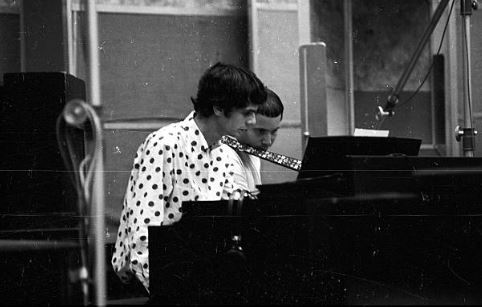
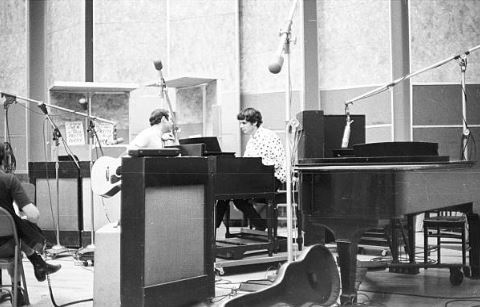
Paul Simon and Al Kooper
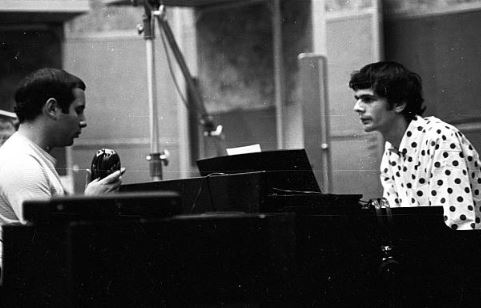
When Paul Simon first arrived in Britain in the mid-1960s, he was still an emerging American songwriter searching for inspiration. What he found was Martin Carthy, one of England’s most respected folk musicians — and a traditional ballad called “Scarborough Fair” that would soon become famous around the world.
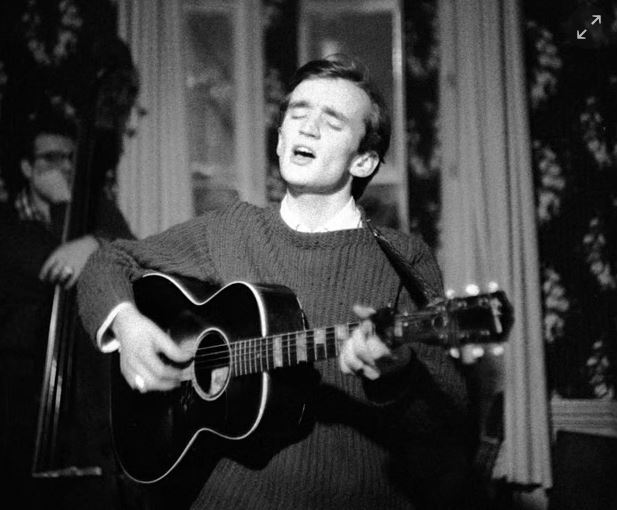
Martin Carthy
Carthy says he taught the song to Simon in 1964, years before iconic folk duo Simon & Garfunkel turned it into their haunting hit “Scarborough Fair/Canticle.” But what started as a friendly exchange of songs became one of the longest misunderstandings in folk history.
A new interview with The Times tells the story,
"When Paul Simon passed through Britain in 1964, Carthy taught him 'Scarborough Fair' as well. It led to bad blood between the two for years, with Carthy believing the New York songwriter had stolen his arrangement for the Simon & Garfunkel classic 'Scarborough Fair' / 'Canticle.'”
For decades, the British musician quietly carried that frustration, convinced that Simon had lifted his version of the song. But time — and a closer listen — changed everything.
“He actually wrote a song in tribute to 'Scarborough Fair,' he didn’t steal my arrangement, and if I had bothered to listen to his version for 30 seconds, I would have realised,” Carthy admitted. “Paul is an entirely honourable person.”
“Scarborough Fair” has its own long, winding story. Simon learned the centuries-old ballad from Carthy while visiting London in 1965, and Carthy had first picked it up years earlier from a folk songbook by Ewan MacColl and Peggy Seeger. When Simon & Garfunkel reimagined it as “Scarborough Fair" / "Canticle” — pairing it with anti-war lyrics from Simon’s earlier “The Side of a Hill” — it became one of their signature songs, later featured in The Graduate. The duo’s version credited only themselves as writers, which initially upset Carthy, but the two men ultimately reconciled when Simon invited him to perform the song with him in London in 2000.
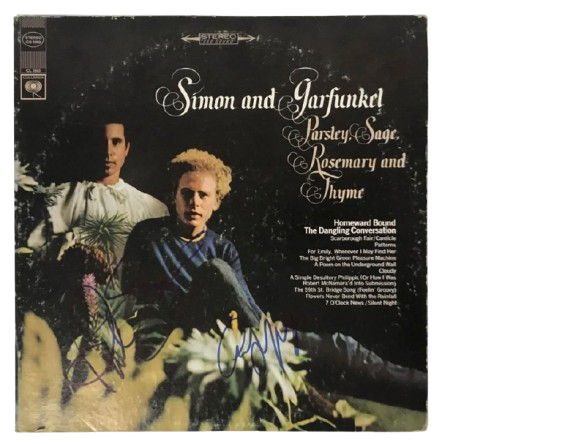

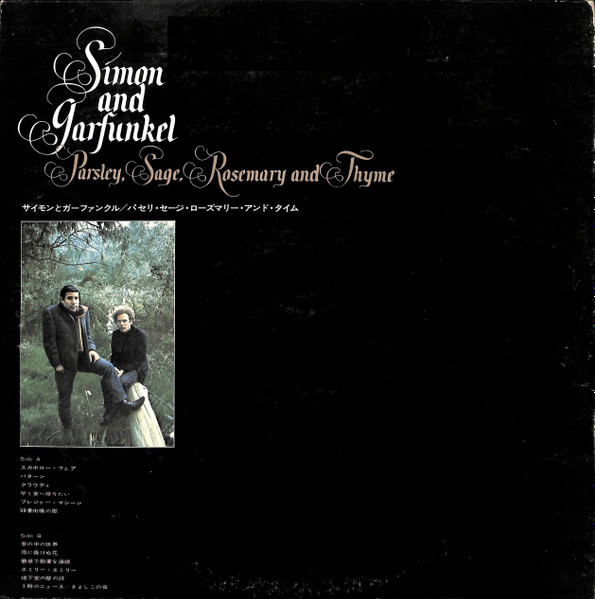
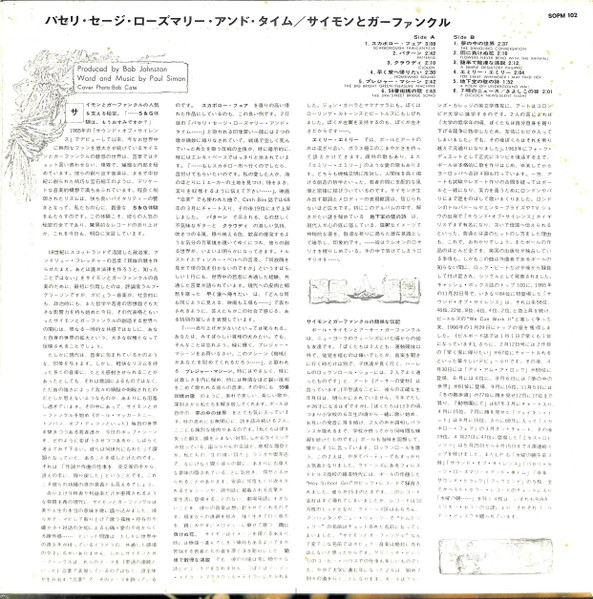
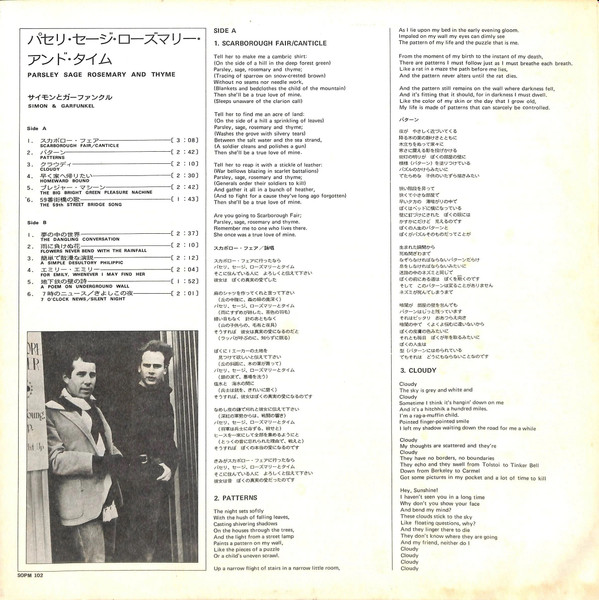
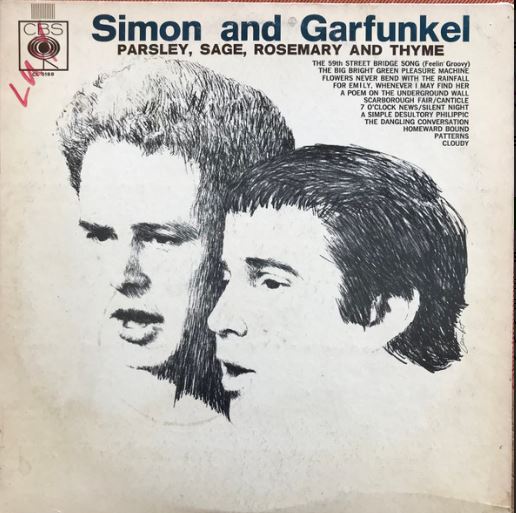
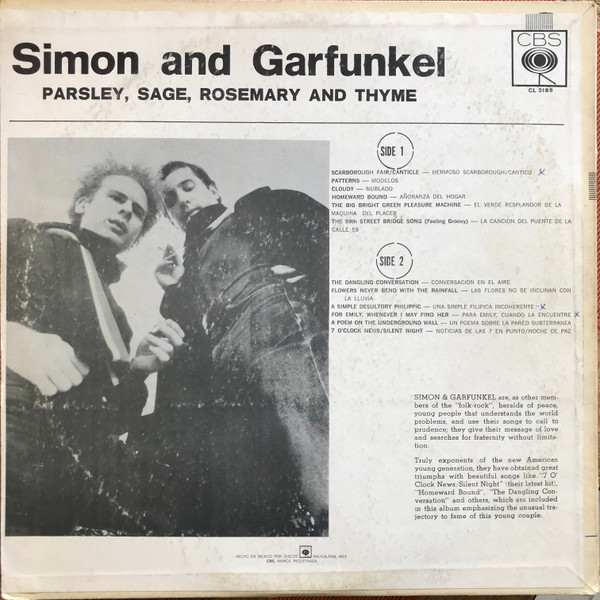
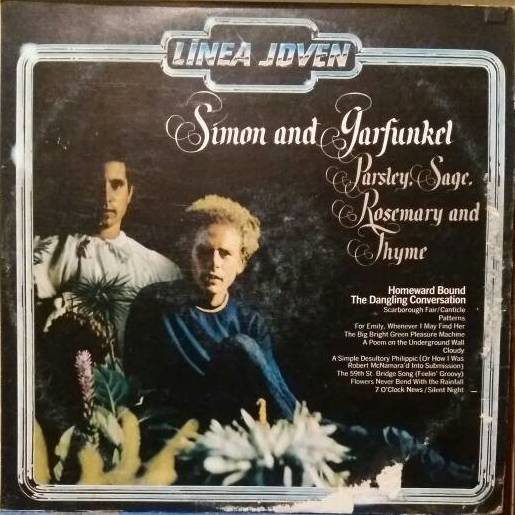
LP 1967 Mexico
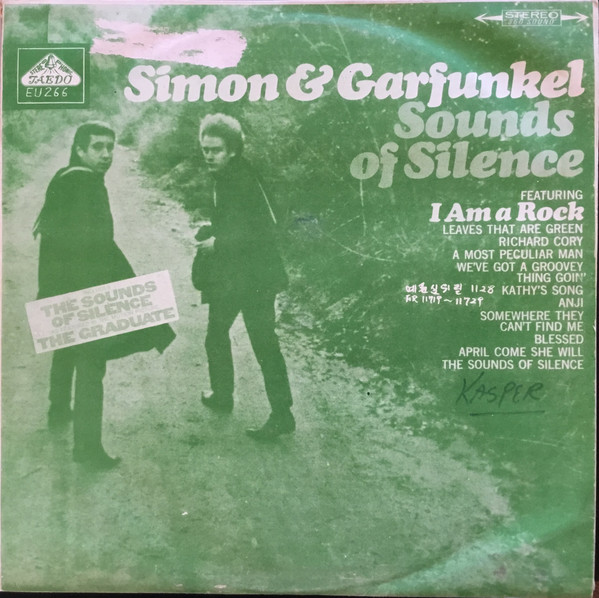
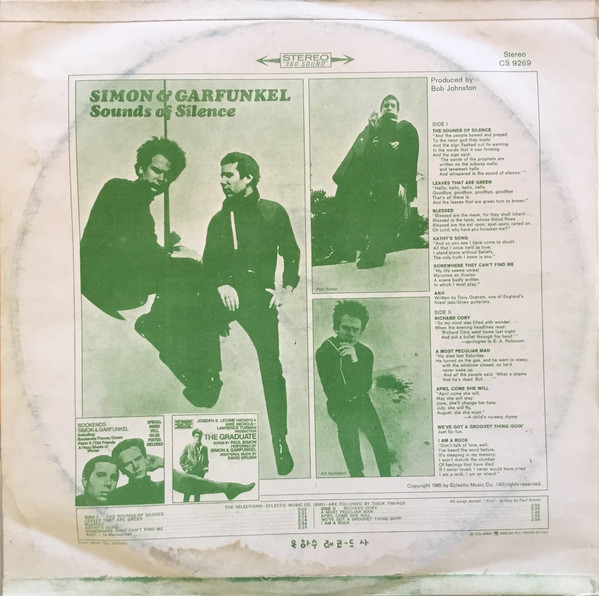
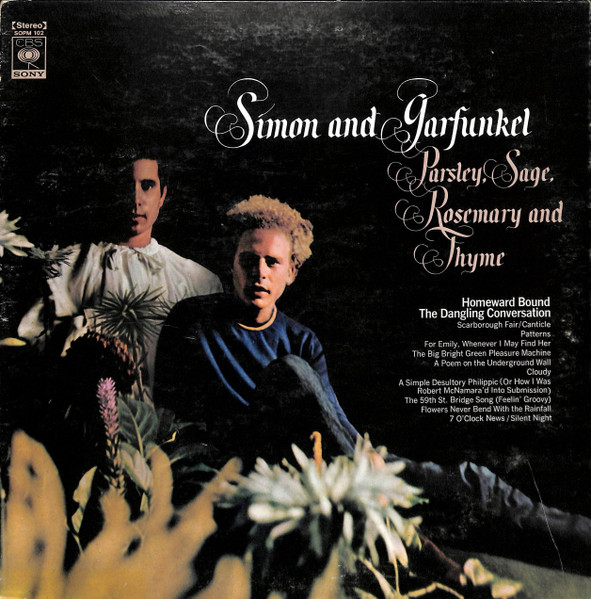
1970 South Korea
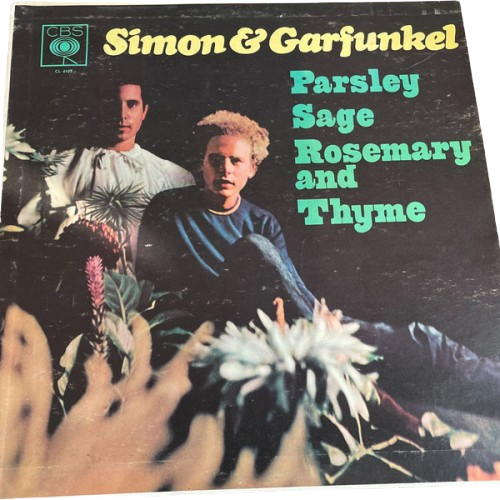
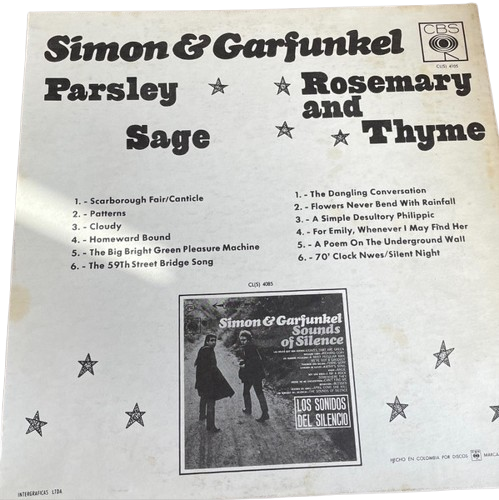
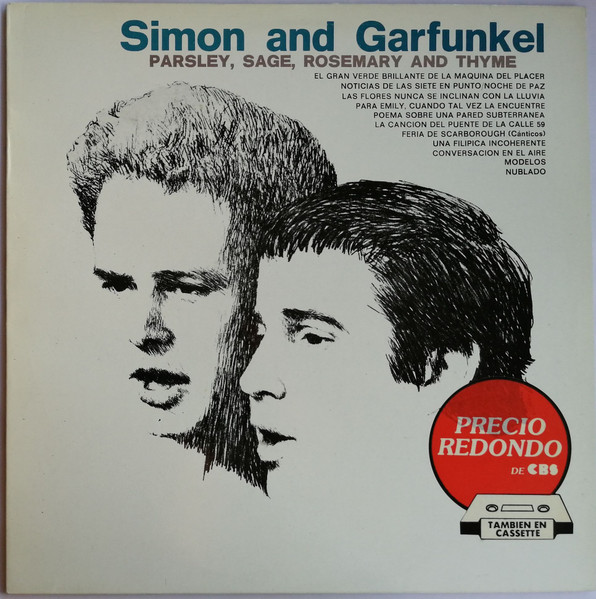
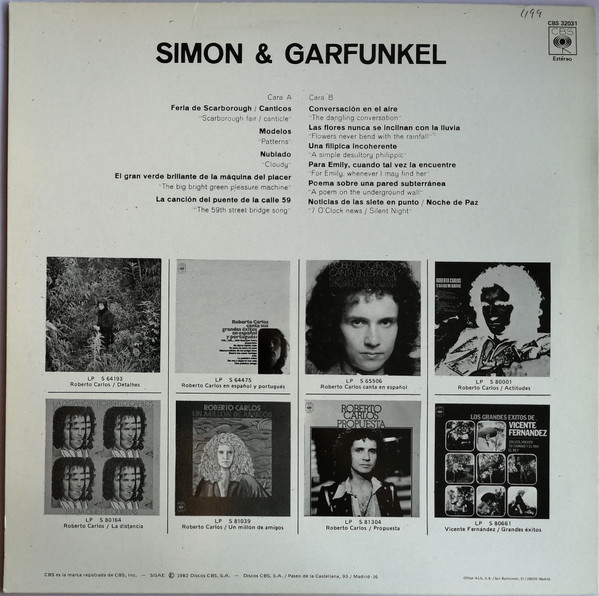
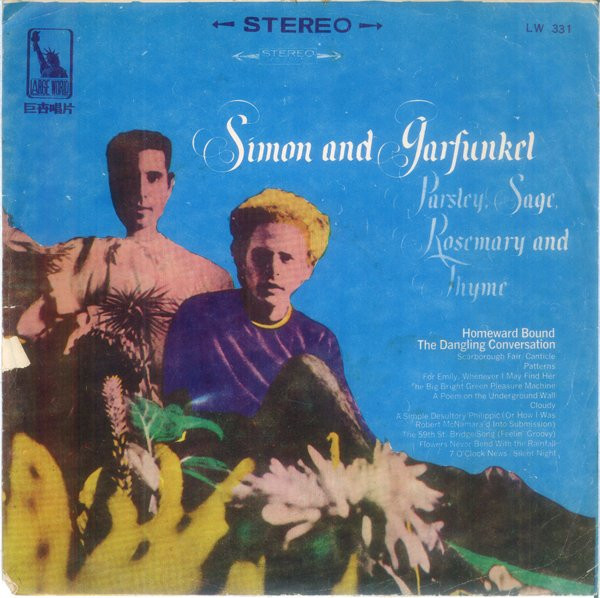
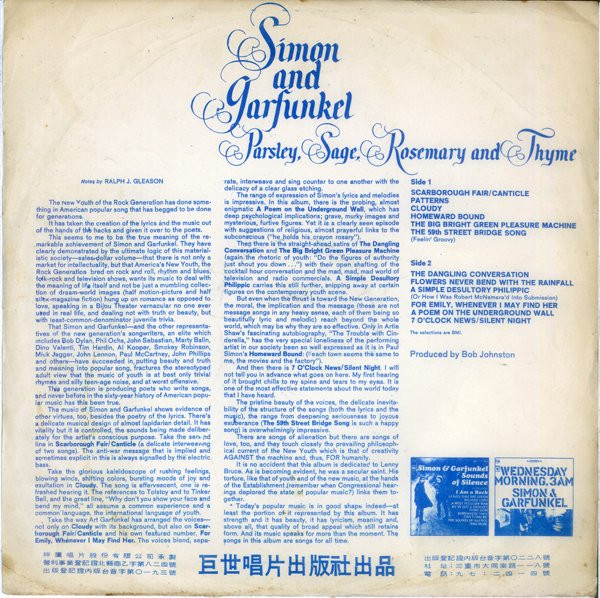
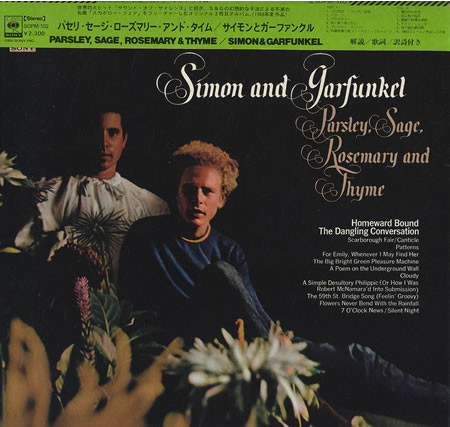
1967 Taiwan LP
.png)
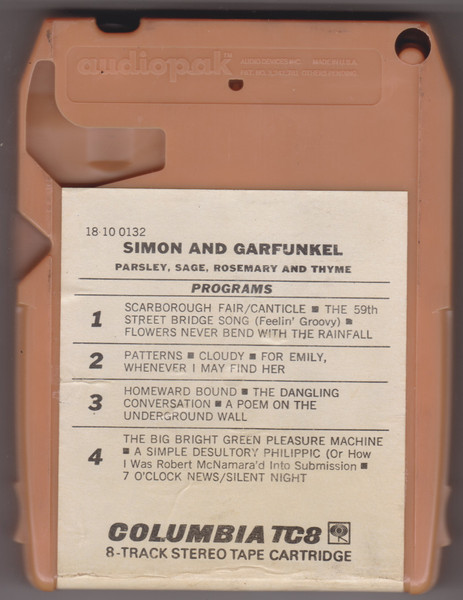
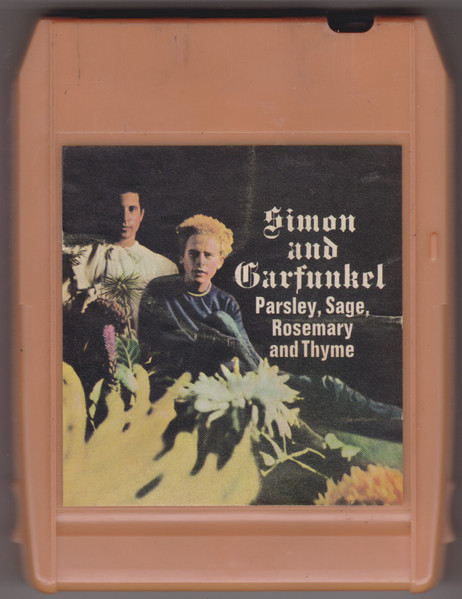
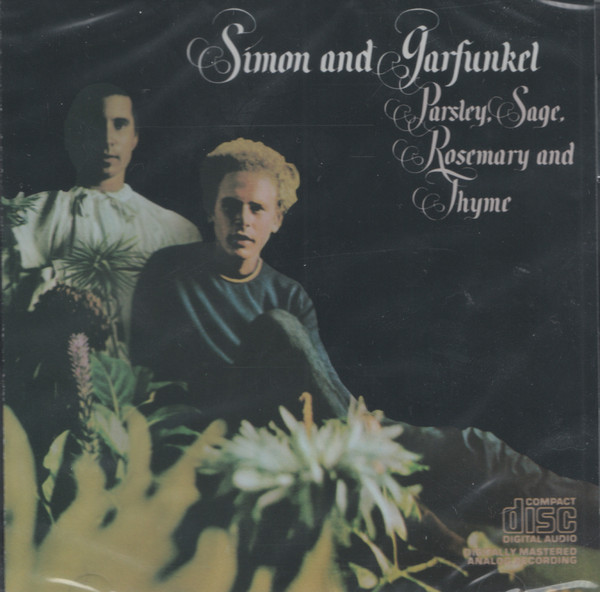
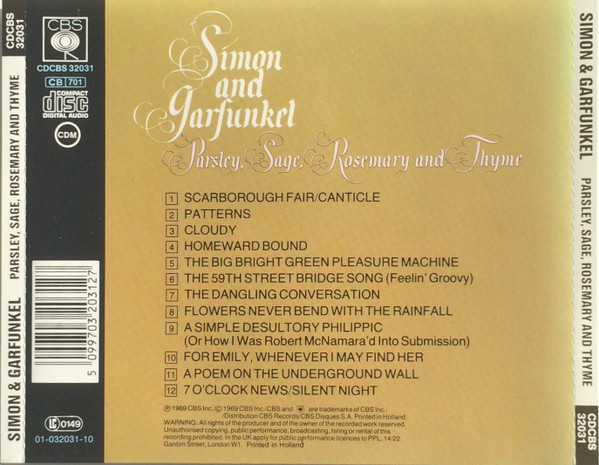
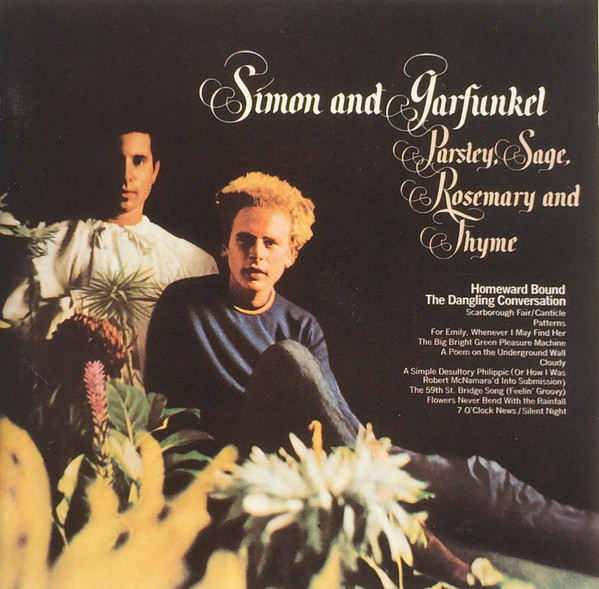
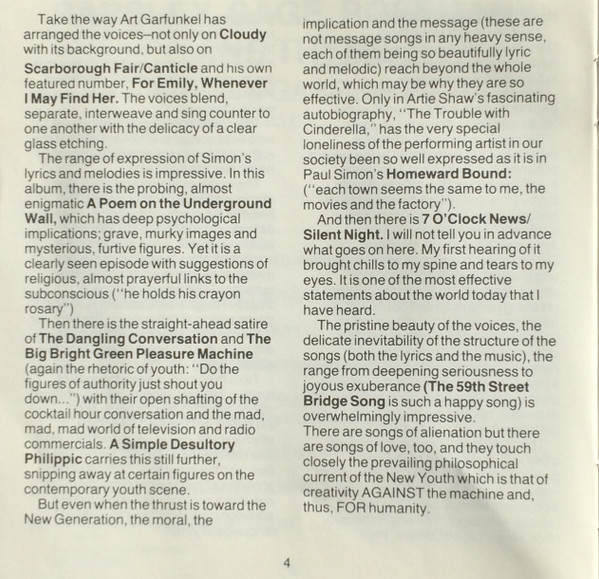
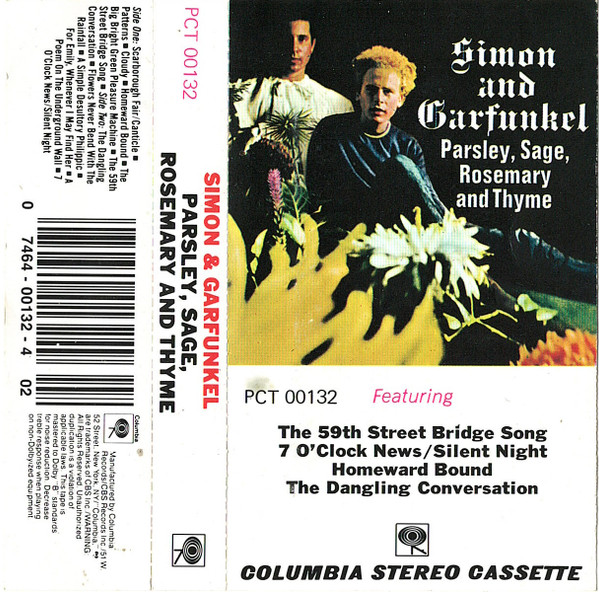
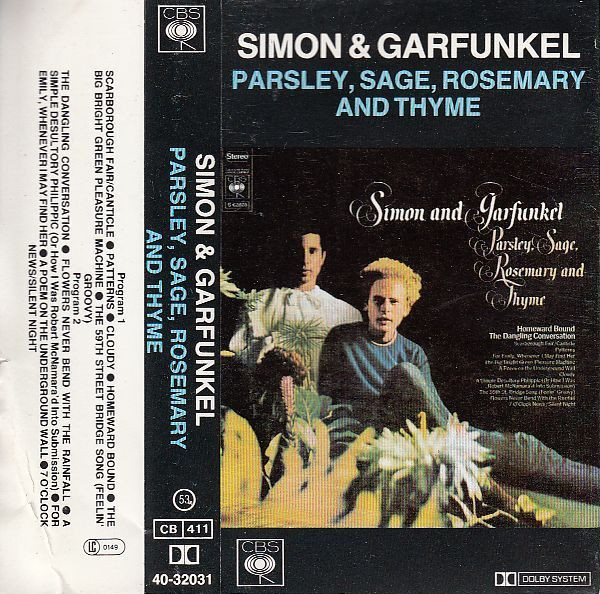
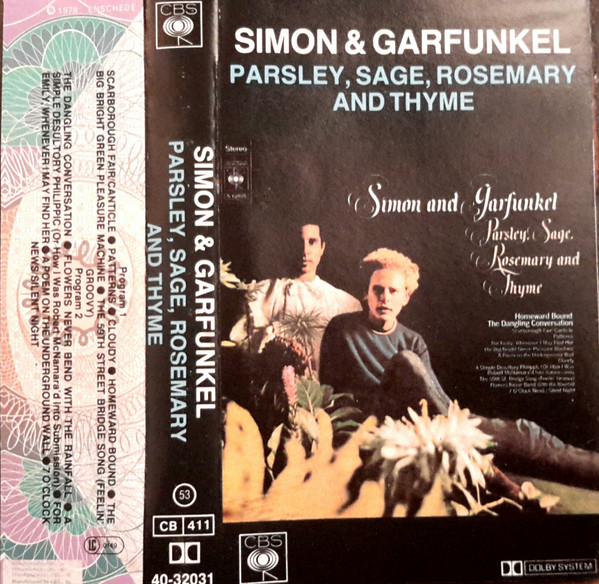
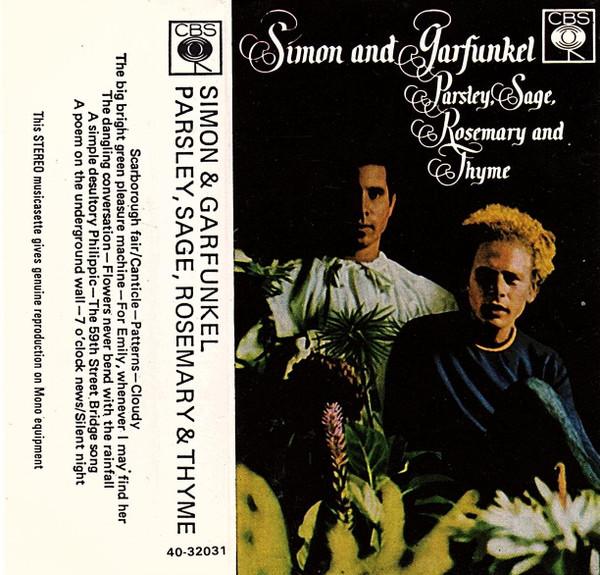
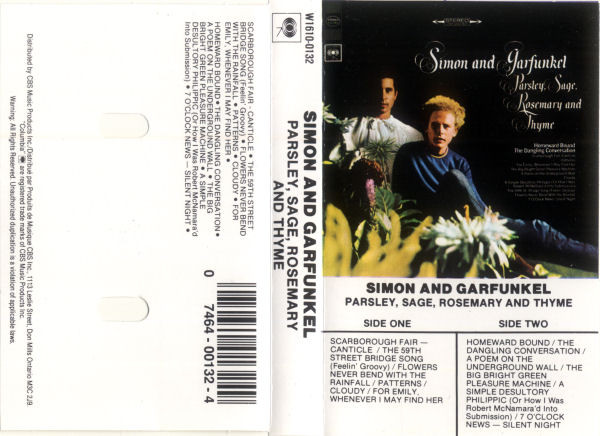
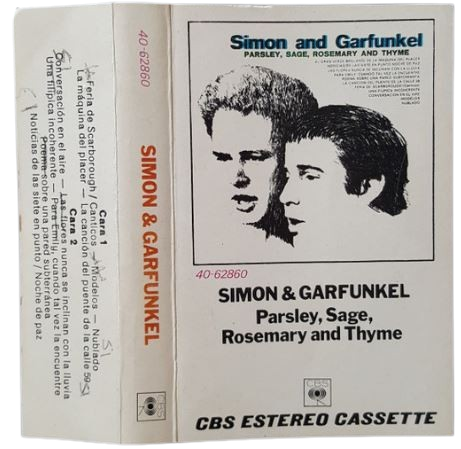
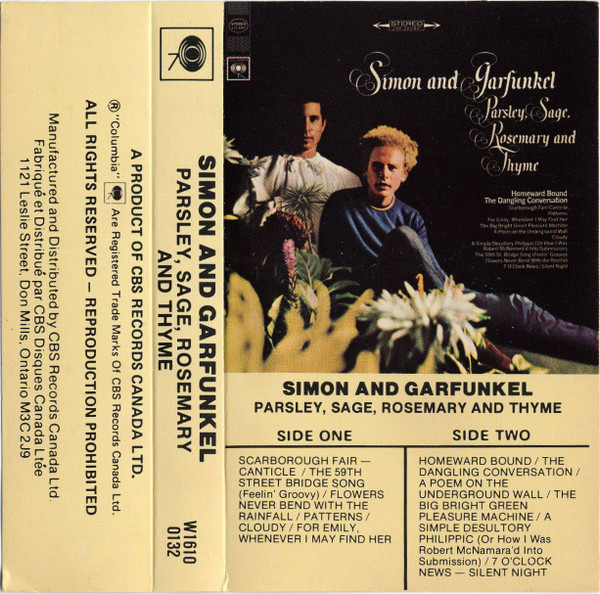
Parsley, Sage, Rosemary and Thyme is an album by Simon and Garfunkel, released in the United States on October 10, 1966. Its name comes from the second line of the album's first track, "Scarborough Fair/Canticle," an English folk song from the 16th century, paired with a counter-melody and text about a soldier. It peaked on the U.S. charts at #4. The album was produced by Bob Johnston as Columbia Records LP CL 2563 (mono); CS 9363 (stereo); CD CK 9363; Remastered CD CK 66001. "Homeward Bound" was excluded from the album in the UK.
The album can be seen as having a protest element in it: the closing song, "7 O'Clock News/Silent Night," contained clips of a news broadcast about the Vietnam War. Based on the fact that the broadcast carries the news of the death of comedian Lenny Bruce that day, it can be dated from 3 August 1966.
In 2003, the album was ranked number 201 on Rolling Stone magazine's list of the 500 greatest albums of all time. [1]
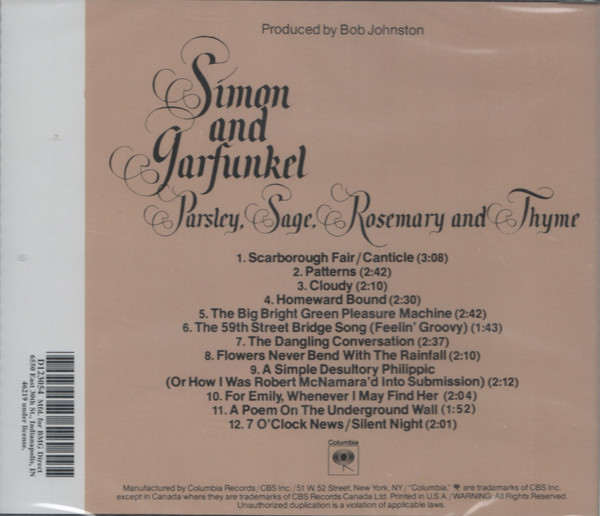
Track listing
Music sample:
Scarborough Fair/Canticle"
16 second sample from Simon and Grafunkel's "Parsley, Sage, Rosemary and
Thyme".
Problems listening to the file? See media help.All songs by Paul Simon except
where noted.
Side one
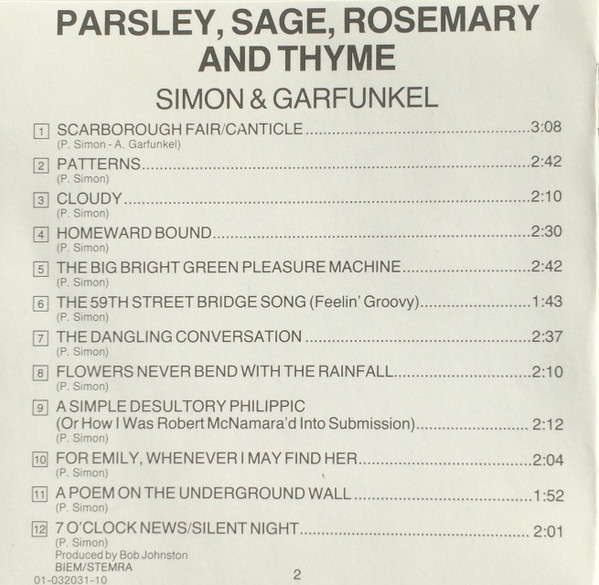
"Scarborough Fair/Canticle" (Traditional, arranged by Paul Simon,
Art Garfunkel) – 3:10
"Patterns" – 2:42
"Cloudy" (Paul Simon, Bruce Woodley) – 2:10
"Homeward Bound" – 2:30
"The Big Bright Green Pleasure Machine" – 2:44
"The 59th Street Bridge Song (Feelin' Groovy)" – 1:43
Side two
"The Dangling Conversation" – 2:37
"Flowers Never Bend With The Rainfall" – 2:10
"A Simple Desultory Philippic (or How I Was Robert McNamara'd Into Submission)"
– 2:12
"For Emily, Whenever I May Find Her" – 2:04
"A Poem on the Underground Wall" – 1:52
"7 O'Clock News/Silent Night" (Josef Mohr, Franz Gruber) – 2:01
Bonus tracks (2001 CD reissue)
"Patterns" (Demo)
"A Poem on the Underground Wall" (Demo)
Personnel
Paul Simon – lead vocals, guitar
Art Garfunkel – lead vocals, piano
Joe South - guitar
Most tracks were recorded in Nashville with resident musicians.
Bassist Eugene Wright and drummer Joe Morello of the Dave Brubeck Quartet
played on The 59th Street Bridge Song
The voice of the newscaster on 7 O'Clock News/Silent Night was that of Charlie
O'Donnell, then a New York disc jockey.
Oct 10 1966 US LP - Columbia LP CL 2563 (mono); LP CS 9363 (stereo); CD CK 9363 (US: #4)
Produced by Bob Johnston.
Released as part of the box set Simon And Garfunkel Collected Works,
on LP and CD. 
Released as part of the box set Columbia recording 1964 -1970 